~$1.5M
Attributed to Generative Direct Answers

Targeted initiatives that unblocked enterprise workflows and business outcomes

 Search
 Reviews
 Knowledge Graph
This body of work represents a collection of targeted, high-leverage design initiatives delivered across multiple product domains at Yext. Rather than large, end-to-end redesigns, these efforts focused on reducing friction, increasing trust, and unblocking enterprise workflows—often under tight timelines and direct business pressure.
Each initiative was grounded in a clear hypothesis, intentionally scoped, and executed with speed and pragmatism. Some shipped fully, while others informed longer-term product direction. Together, they reflect a practical approach to product design in real enterprise environments—balancing user needs, business impact, and technical constraints.
Role: Product Strategy & UX Design
Domains: Search · Reviews · Knowledge Graph
Yext is an enterprise digital presence platform that helps brands manage, optimize, and measure their presence across search, maps, websites, and apps—delivering accurate, trusted experiences at scale across complex, multi-location environments.
Yext Search enables businesses to deliver AI-powered search experiences across their websites and digital properties. It provides accurate, direct answers grounded in structured data to help users find what they need quickly and confidently.
Yext Reviews enables businesses to monitor, analyze, and respond to customer reviews across publishers like Google and Facebook. It helps brands manage reputation at scale while improving engagement, response time, and customer sentiment.
Yext Knowledge Graph is a centralized system of record that stores and structures business data across locations, products, services, and more. It ensures accurate, consistent information powers every downstream digital experience.
Yext Search historically powered structured, enterprise-grade search experiences built around links, featured snippets, and structured results. As large language models entered the mainstream, user expectations shifted toward direct, summarized answers rather than lists of results.
For businesses, this introduced a deeper challenge. Beyond generating answers, they needed to understand how responses were created, maintain control over what was communicated on their behalf, and trust the accuracy and sourcing behind AI-generated content.
At the time, enterprise generative search had few established patterns. While answer generation was technically feasible, the primary design challenge centered on trust, governance, and accountability.
Multiple concepts were explored before aligning on an end-to-end experience focused on:
Early concepts were tested with four enterprise customers across different industries to validate expectations around automation, control, and responsibility. The goal at this stage was learning and direction-setting rather than polish.
Attributed to Generative Direct Answers

Reduction in average searches per session
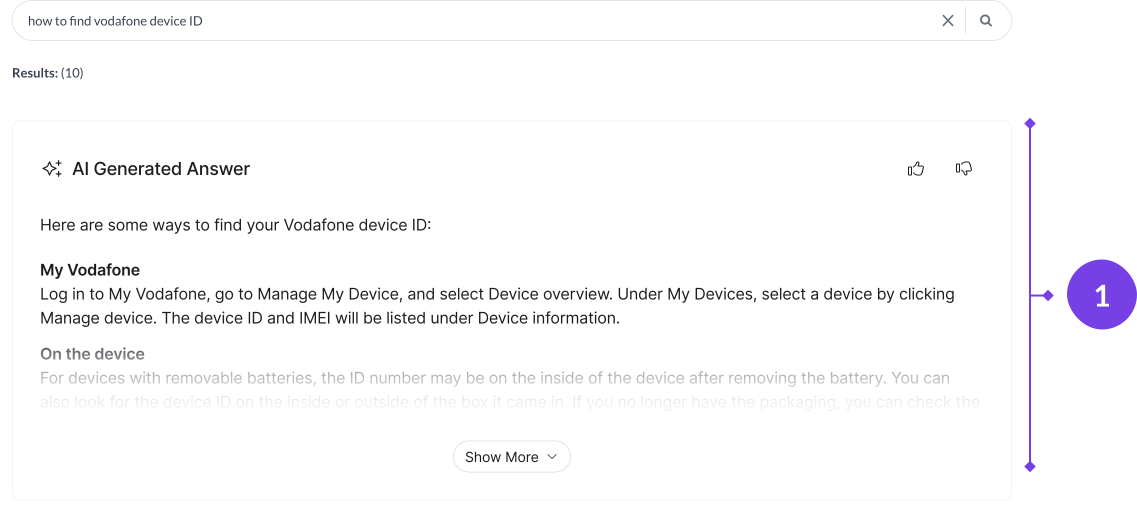

Generative answers were surfaced above traditional search results to align with user expectations for direct responses. Each answer defaulted to a concise summary, with the option to expand for deeper detail. Lightweight feedback (thumbs up/down) enabled ongoing quality signals without introducing friction.
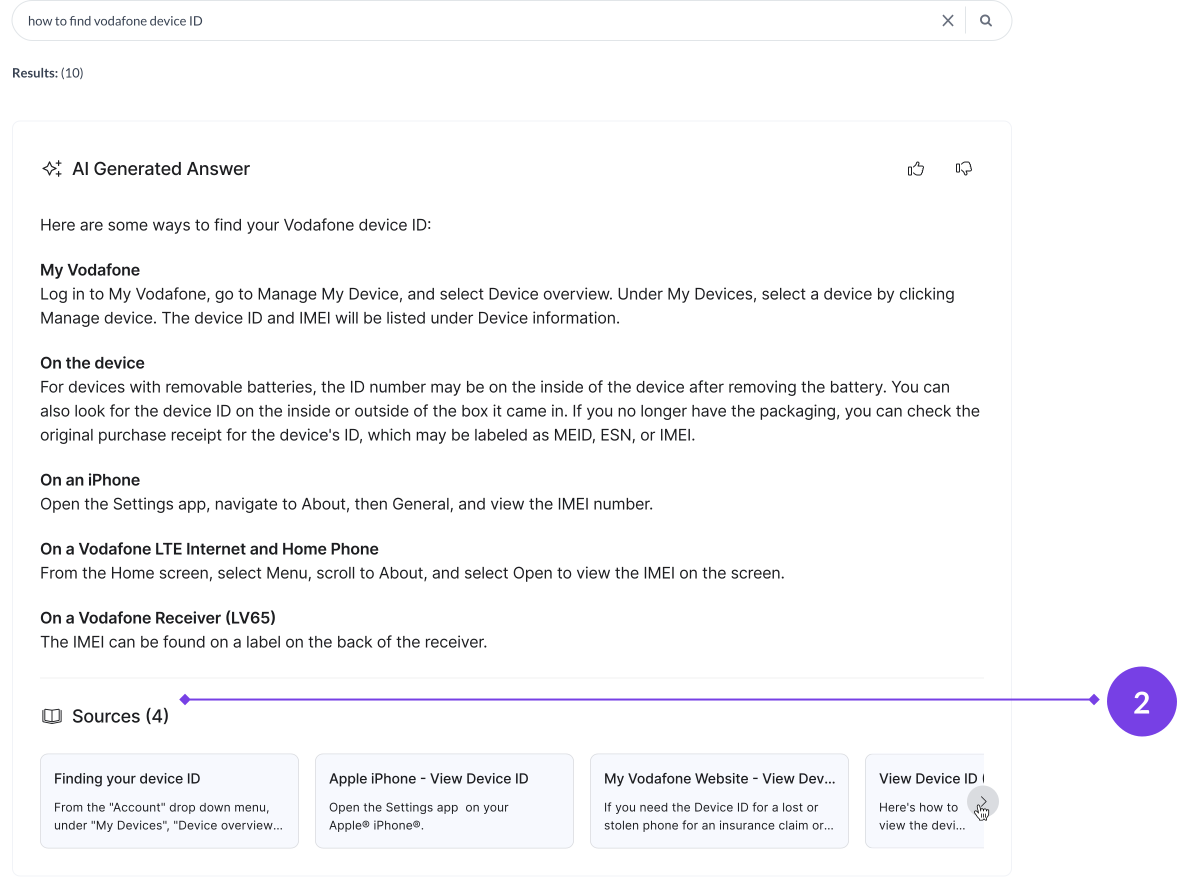
Sources were displayed alongside generated answers, allowing users to quickly verify accuracy or explore further. This transparency increased trust by making AI responses feel grounded rather than opaque.
Despite being in market since 2016, Yext Reviews lacked support for responding to reviews in bulk. For customers managing hundreds or thousands of locations, responding individually across platforms like Google, Yelp, and Facebook was operationally inefficient and increasingly unscalable.
For large consumer service brands, this gap created a competitive disadvantage and became a renewal risk.
The goal was to unblock high-volume workflows quickly while maintaining clarity, control, and brand safety at enterprise scale.
The work was intentionally split into two milestones:
Existing design system patterns were reused to accelerate delivery and reduce risk, as speed was critical to near-term business outcomes.

Additional reviews responded to (~14.6% increase)

Improvement in average response time
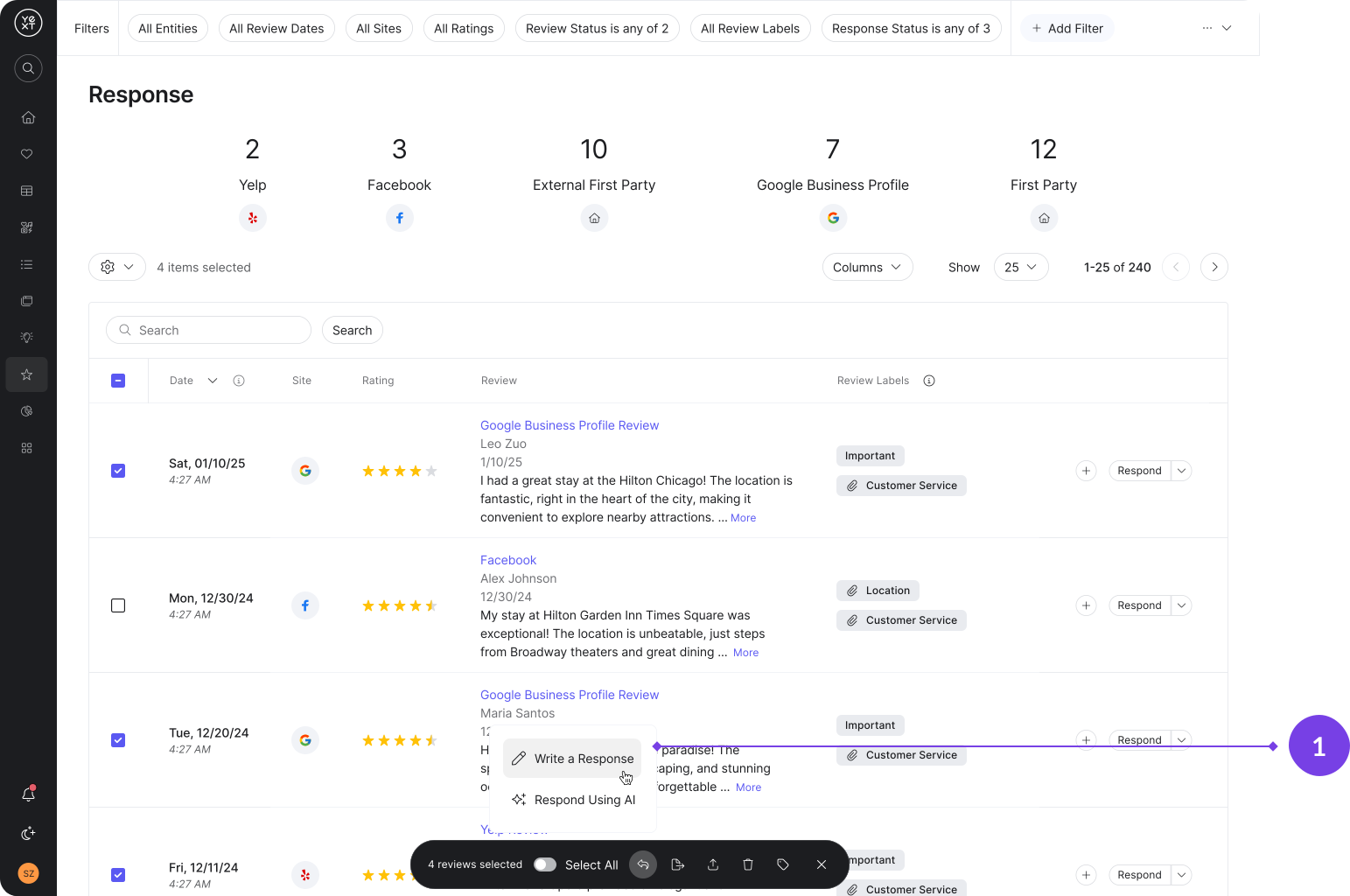
A bulk response workflow enabled teams to select multiple reviews and respond either manually or with AI assistance. All bulk actions were consolidated into the design system’s bulk action bar, reducing cognitive load and supporting faster, high-volume workflows.
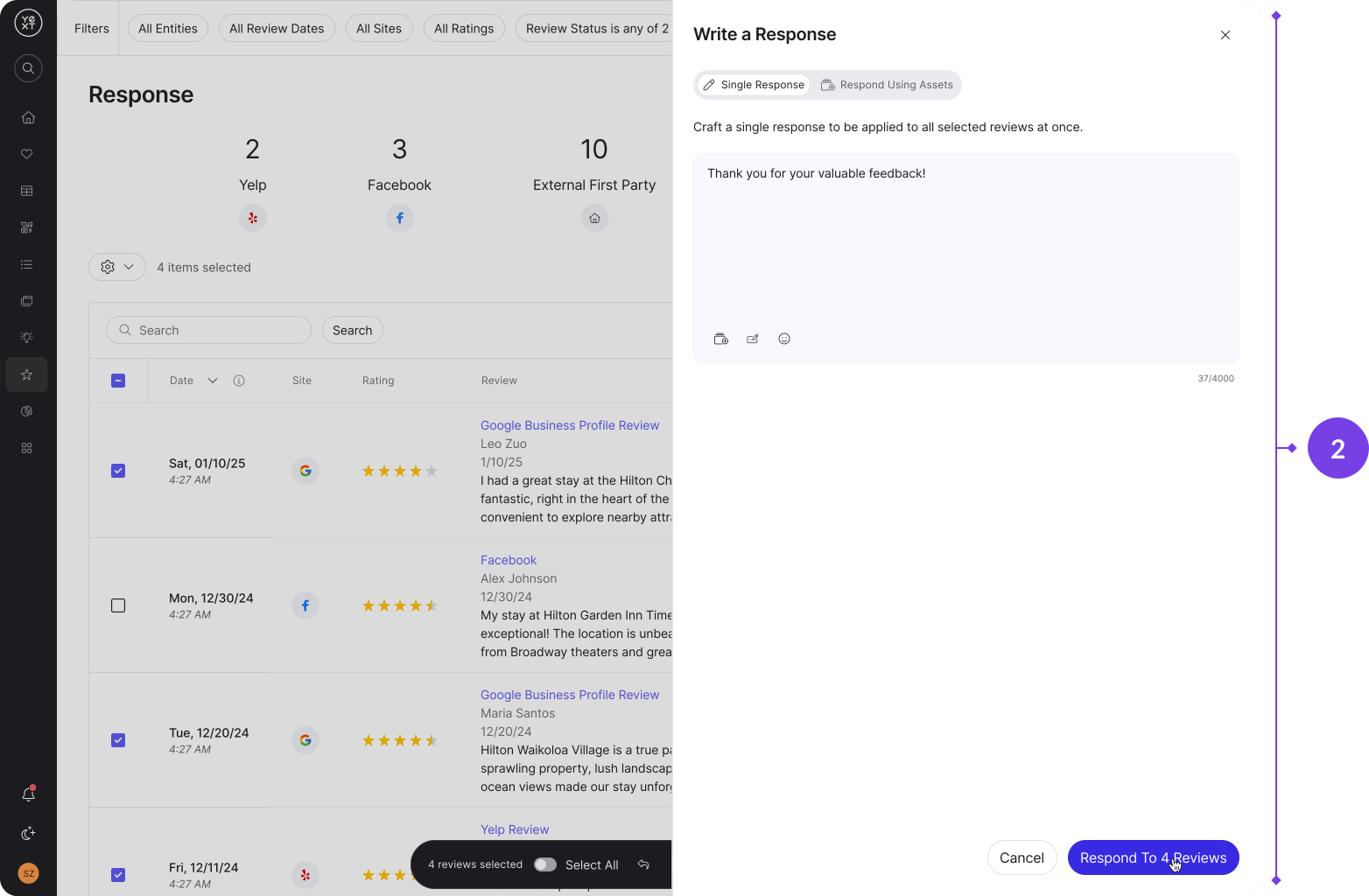
The response authoring experience supported both manual writing and approved templates. Teams could write responses from scratch using dynamic fields from the Knowledge Graph or reuse pre-approved assets—balancing flexibility with consistency and brand safety at scale.
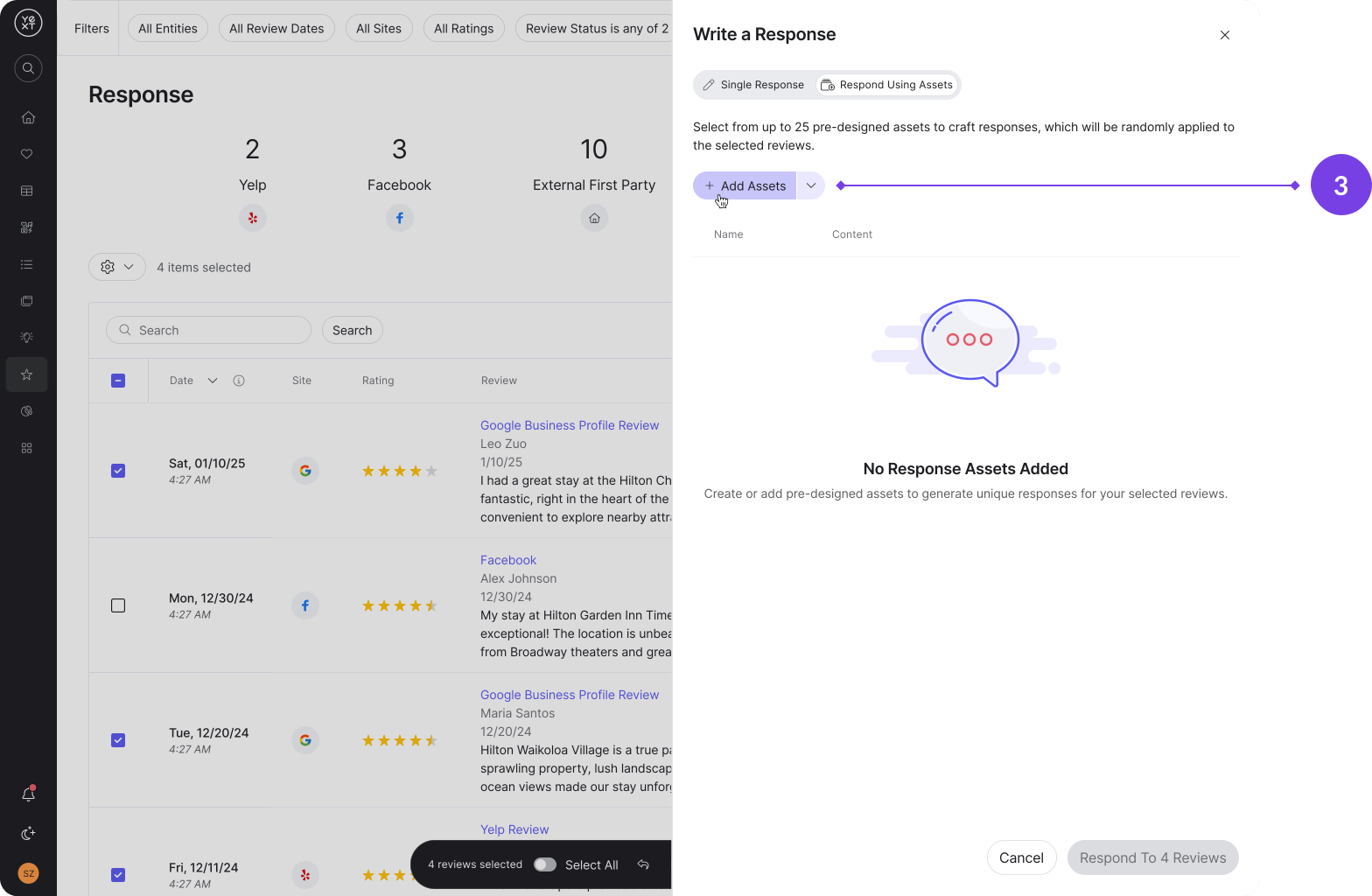
Teams could choose from existing approved templates or create new ones within the same flow. Predefined templates enabled fast, compliant responses at scale, while still allowing flexibility for new or evolving scenarios.
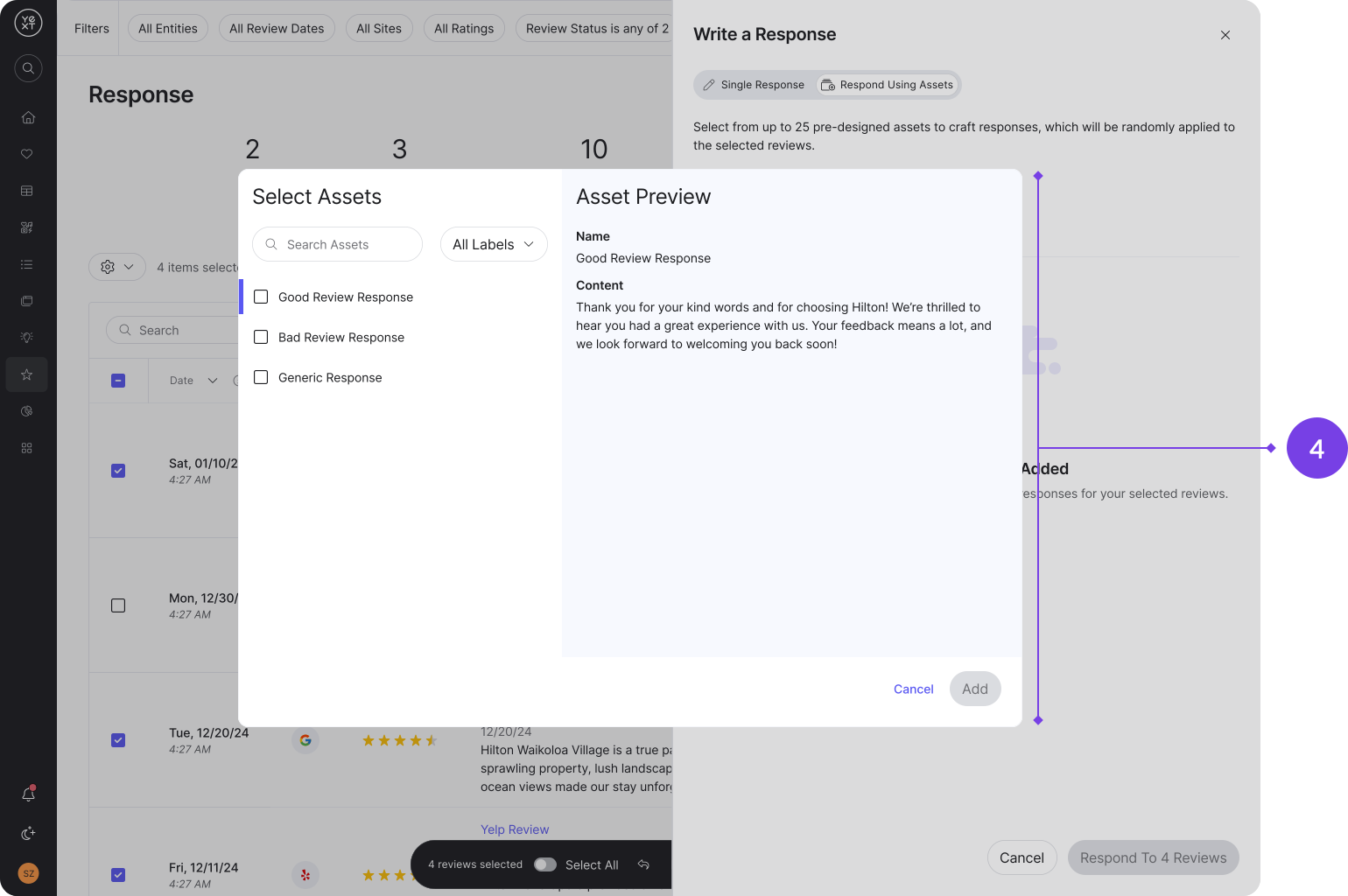
Each template included a preview of tone, structure, and content before application. This reduced errors and increased confidence, particularly when responding across large volumes of reviews.
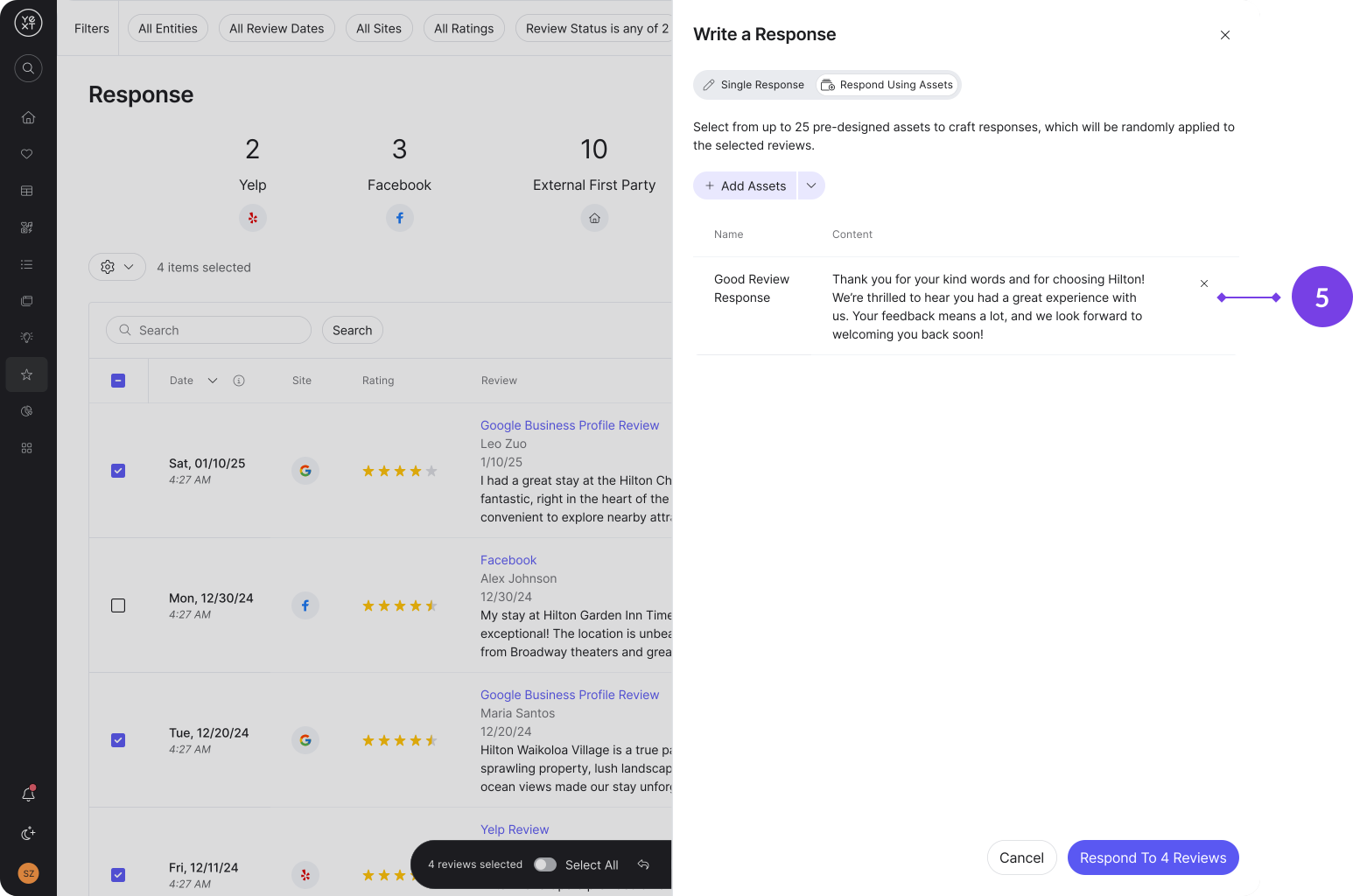
Selected templates were applied across chosen reviews. When multiple templates were used, responses were automatically distributed to avoid repetition—maintaining efficiency while preserving variation and authenticity.
Teams could choose from existing approved templates or create new ones within the same flow. Predefined templates enabled fast, compliant responses at scale, while still allowing flexibility for new or evolving scenarios.
Each template included a preview of tone, structure, and content before application. This reduced errors and increased confidence, particularly when responding across large volumes of reviews.
Selected templates were applied across chosen reviews. When multiple templates were used, responses were automatically distributed to avoid repetition—maintaining efficiency while preserving variation and authenticity.
Enterprise and franchise-based customers repeatedly requested the ability to export review data via SFTP or FTP. Many relied on file-based workflows to distribute data to regional teams or franchise owners who were not onboarded to Yext.
Without a native solution, teams depended on manual spreadsheets that were slow, error-prone, and difficult to scale. While APIs existed, they were not viable for customers with fragmented internal systems. The absence of this capability became a renewal blocker for one of Yext’s largest Reviews customers.
The objective was to unblock revenue quickly while delivering a scalable, enterprise-ready solution.
A flexible export experience was designed to allow customers to:
A management view was also designed to support editing, auditing, and disabling exports over time. Existing UI patterns were reused to reduce engineering overhead and accelerate delivery.
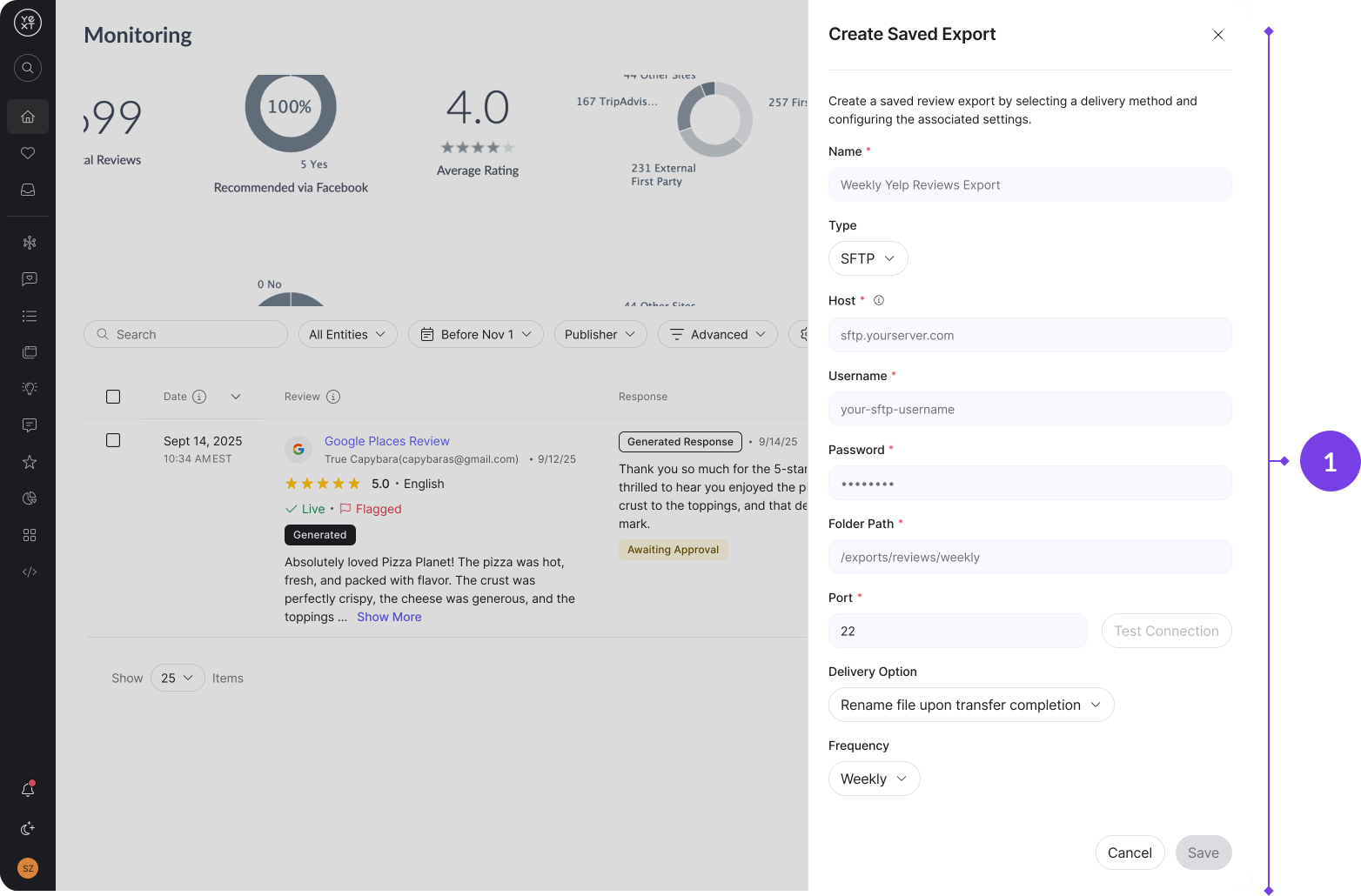
A flexible setup flow enabled teams to configure exports via SFTP, FTP, or email, with control over delivery frequency. A built-in test connection step allowed users to validate configurations upfront, reducing setup errors, failed exports, and support overhead—especially for large or complex organizations.
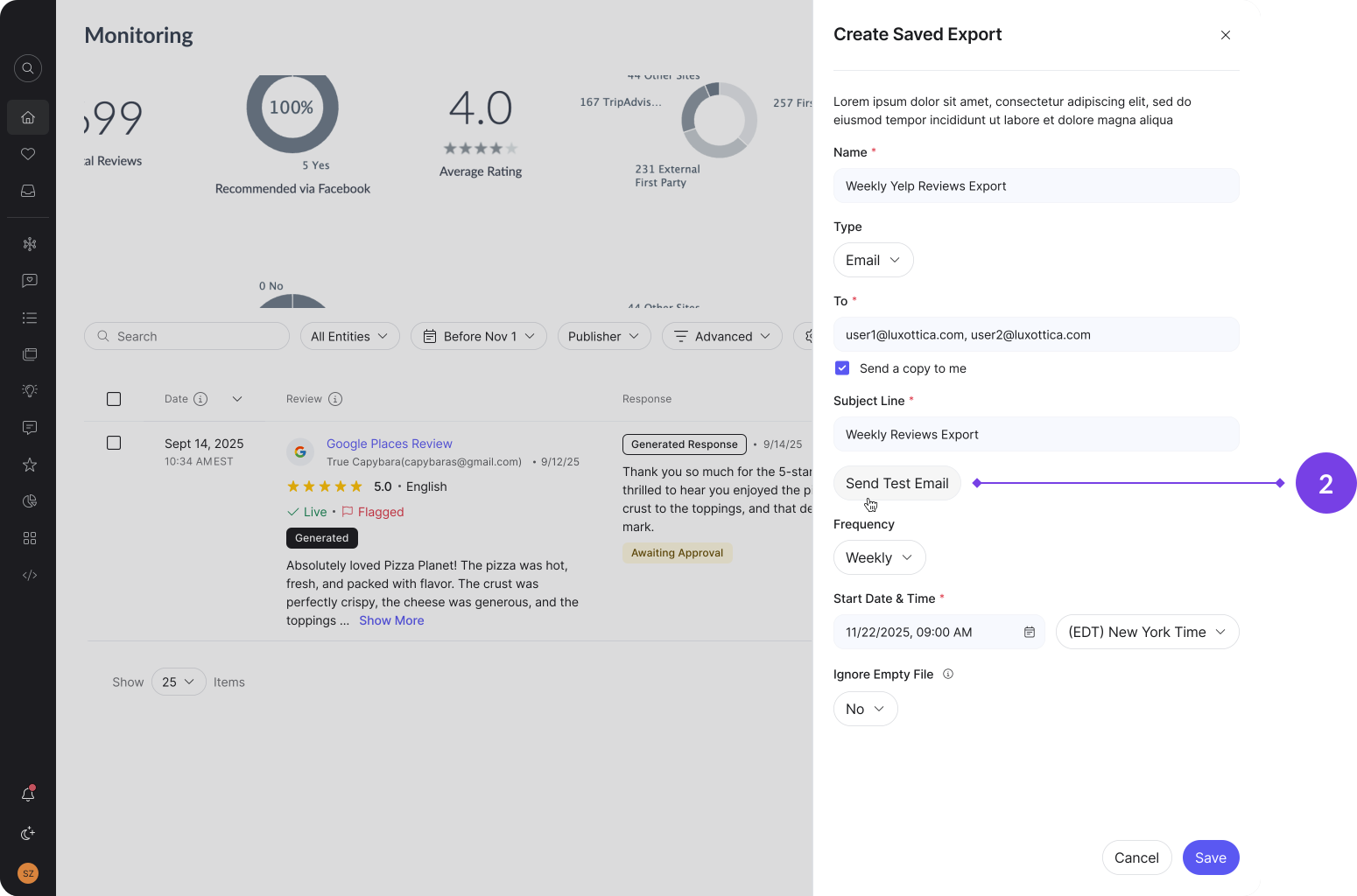
For email-based exports, the same validation pattern was extended to allow teams to test delivery before saving. This ensured reliability across delivery methods and gave users confidence that exports would reach the intended recipients as expected.
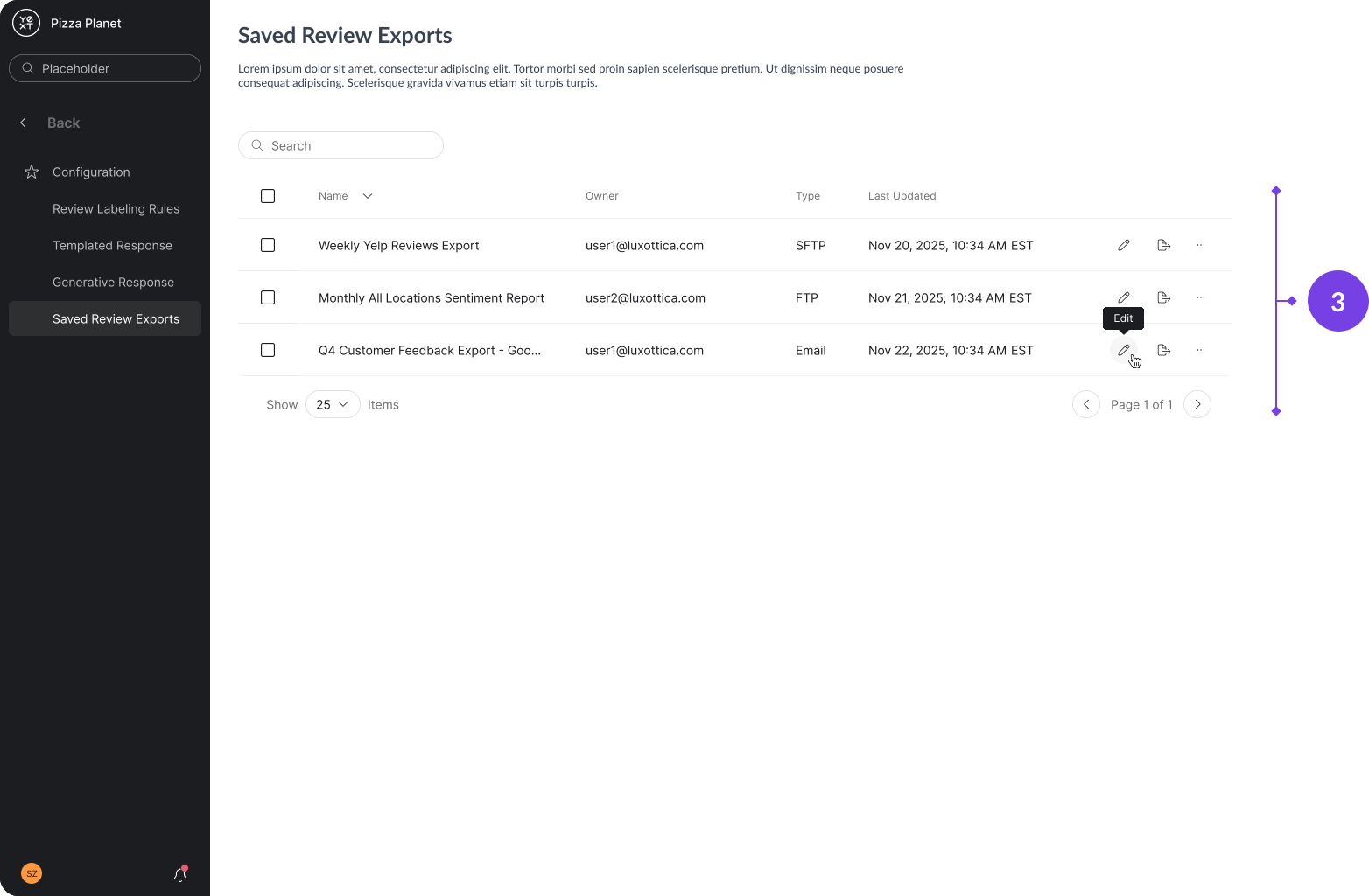
Recognizing that configuration alone isn’t sufficient at enterprise scale, a management view was designed to support ongoing control and visibility. Teams could see when an export last ran, who created it, and how it was delivered, as well as run exports ad hoc, edit settings, or disable them—supporting accountability, maintenance, and long-term operational clarity.
Customers relied on the Knowledge Graph to manage business data at scale, but keeping content complete and consistent across thousands of entities required significant manual effort.
As LLM APIs became available, customers increasingly wanted to automate content generation—such as business descriptions—using data they already maintained. At the time, there was no safe, scalable way to support this within the platform.
Computed Field Values were introduced to allow customers to define logic once at the field level and automatically compute values across entities.
For example, instead of manually authoring descriptions for each location, customers could generate them programmatically using existing data—maintaining consistency while significantly reducing effort.
Computed Field Values shifted the Knowledge Graph from a passive data store into an active system that helped customers maintain content quality at scale.
This work was later recognized with a granted patent, covering the system for automatically computing and updating field values based on relationships and dependencies within a graph-based platform.
Across these initiatives, the consistent pattern was solving meaningful problems without over-engineering the solution. The focus was on identifying high-impact friction, scoping pragmatically, and delivering measurable value within real business and technical constraints.
In enterprise environments, progress often comes from creating clarity, trust, and forward momentum rather than chasing perfection. Balancing speed with governance, and scalability with usability, proved more valuable than optimizing for ideal systems from the start.